Showing posts with label nz. Show all posts
Showing posts with label nz. Show all posts
Sunday, May 23, 2021


Sunday, October 18, 2020

Sunday, June 28, 2020


Sunday, January 26, 2020

Saturday, September 16, 2017

Sunday, August 27, 2017

Tuesday, January 10, 2017

Sunday, October 02, 2016

Wednesday, March 30, 2016

Sunday, January 24, 2016

Saturday, March 28, 2015

Friday, September 12, 2014

Monday, August 04, 2014

Wednesday, May 14, 2008

Monday, January 14, 2008

Thursday, July 05, 2007
Ticket - Awake (1972) & Let Sleeping Dogs Lie (1972)

During the period of 1972, Ticket were New Zealand's ultimate acid band.
Guitarist Eddie Hansen emerged on the music scene in a group called Revival, which also contained vocalist Craig Scott. When Craig went solo in April 1970, the Revival broke up. At that point Eddie left Christchurch and headed to Auckland. He accepted a gig with Challenge, who were in their last days, after having had a couple of successful hits. He quickly realised that he shared a common interest in the styles of music of the likes of Crazy Horse, Traffic and Jimi Hendrix, with Challenge drummer Ricky Ball. The two of them decided to form their own group, in order to be able to play their preferred style of music.
The pair looked around for some like-minded musicians to join them, and found Paul Woolright to play bass guitar and Trevor Tombleson for vocals. With this line-up, Ticket was formed in May 1970.
Ricky Ball started his career with a group called the Beatboys, then the Courtiers, before becoming a member of the Challenge. Trevor Tombleson played bass guitar back in 1965 with a group called Moses and the Munks, before joining the Jamestown Union. He eventually left that group to pursue a solo career as M.T. Davies in 1967. Trevor became friends with Ricky Ball, and this friendship developed, with Ricky asking Trevor to join Ticket.
Ticket started playing gigs around Auckland, but were not getting enough work to pay the bills. Eddie called Trevor Spitz in Christchurch to see if he could help out with a venue. Trevor had been with the Four Fours and when he left them in 1966 he got a job managing Phil Warren's Monaco nightspot in Christchurch. This was the venue that Revival had played at. Trevor asked for a demo tape and after listening to it got the group a gig at another of Warren's venues, Aubreys, in Christchurch.
It was at Aubreys that Ticket developed a sound that was radically different to what any of them had previously played. Trevor Tombleson was one of the better singers of the underground scene, but it was Hansen's instrumental prowess which dominated the band. Tombleson wailed and Hansen scorched, and behind them stood one of the tightest rhythm sections around. Ricky provided a solid and relentless beat and Paul was the perfect partner to Ball's hard hitting style, holding down the bottom end with precision and just a touch of funk.
By mid-1971 Ticket had outgrown their Aubreys venue, and during that time had built up a big following in other South Island centres. In July 1971 the group decided to head north. Their reputation preceded them and concerts at Universities along the way were well attended and received. In Auckland the group came to the attention of promoters Barry Coburn and Robert Raymond. With new promotional power, the group supported Daddy Cool on their tour, and then headlined Coburn-Raymond's National Blues Rock Convention held at the Wellington Opera House. This attracted a capacity crowd and was also broadcast live on radio.
In October 1971, New Zealand's first international outdoor concert was held when Elton John had his debut show at Auckland's Western Springs. The support slot was well sought after and Ticket were successful, performing in front of 20,000 people.
Coburn even had his own record label, Down Under, so once again with his influence, Ticket recorded and released their first single. Actually released on the Ode label the single was "Country High"/"Highway Of Love". This was very successful for an underground group at the time, with "Country High" spending five weeks on the National charts in December 1971, peaking at number 12.
The follow-up single was "Dream Chant"/"Awake". Released on Down Under, it was not as successful, even though "Dream Chant" had been one of the group's most popular numbers back in their days at Aubreys. In May 1972, their debut album, "Awake", was released. "Awake" was produced by Frank Douglas at HMV Studios and released on the Ode label.
 A third single "Stoned Condition"/"Then You'll Fly" was released on Down Under, but it was banned by the NZBC. In June 1972, Ticket crossed the Tasman, to perform a month long residency at Sydney's Whiskey-Go-Go. The reaction at the Whiskey exceeded everyone's expectations, and rather than returning to Auckland, Sydney based Robert Raymond secured them another residency at Chequers, another prestige gig. Performances in Queensland and Victoria followed.
While in Australia, a single was released there, "Awake"/"Country Radio", on Atlantic. Also while in Melbourne, the group recorded their second album, "Let Sleeping Dogs Lie". This was self-produced and recorded at Channel Nine's 16-track studio. The album was released in late 1972.
Everyone was happy with the album, except Eddie. He was becoming increasingly unhappy with Ball and Woolright's scotch and speed lifestyle, and the pounding beat which was at odds with the atmosphere he was trying to create. Eddie was becoming disillusioned with the hippie / drugs lifestyle.
Meanwhile back in Auckland, Coburn and Raymond, along with Hugh Lynn, had purchased a downtown nightspot, primarily to be used as a home base for Ticket. Management had great faith in the band and had huge plans for the boys over the next twelve months. Coburn and Raymond were in the process of organising a Woodstock style festival at Ngaruawahia for early 1973. Ticket would be given a key slot on the bill and, following the festival, would support headliners Black Sabbath on their Australian tour. This, they believed, would really break the group across the Tasman. That done, they would then head to the US in mid-year.
Ticket returned to New Zealand in November 1972 and opened the new Auckland venue, Levi's Saloon. Fans didn't seem to notice the growing animosity in the band, but it came to a head at the Ngaruawahia Festival. The crowd loved Ticket's performance, but Hansen was disgusted. It was their last gig.
 Another single was released in New Zealand, "Mr Music"/"Let Sleeping Dogs Lie", while in Australia the b-side was "Them Changes". "Mr Music" was an uncharacteristic piece of funk which should have been a hit but wasn't.
After a few months break, Hansen reformed Ticket, with Glen Absolum on drums, Billy Williams on bass guitar and Steve Gunn on vocals. It just wasn't the same, even when Tombleson returned to take over from Steve Gunn. The group had disbanded by the end of 1973.
Tombleson changed his name to Trevor Keith and enjoyed a brief stint with England's Keef Hartley Band in the mid-70's and was later a member of Monsoon, a Melbourne band of expatriate Kiwis.
Eddie Hansen had been converted to Hare Krishna at this stage, the result of his close friendship with Harvey Mann. Eddie played for a short time in 1974 with Band Of Light, but by 1975 he was together with Harvey Mann in Living Force. In 1974 Ricky Ball and Paul Woolright were members of Rainbow. Ricky left that group in August 1976 to become a member of Hello Sailor. In 1980, Paul, Ricky and Eddie all ended up at the same time in Beaver. Taken from here
Rate Your Music
Link
Guitarist Eddie Hansen emerged on the music scene in a group called Revival, which also contained vocalist Craig Scott. When Craig went solo in April 1970, the Revival broke up. At that point Eddie left Christchurch and headed to Auckland. He accepted a gig with Challenge, who were in their last days, after having had a couple of successful hits. He quickly realised that he shared a common interest in the styles of music of the likes of Crazy Horse, Traffic and Jimi Hendrix, with Challenge drummer Ricky Ball. The two of them decided to form their own group, in order to be able to play their preferred style of music.
The pair looked around for some like-minded musicians to join them, and found Paul Woolright to play bass guitar and Trevor Tombleson for vocals. With this line-up, Ticket was formed in May 1970.
Ricky Ball started his career with a group called the Beatboys, then the Courtiers, before becoming a member of the Challenge. Trevor Tombleson played bass guitar back in 1965 with a group called Moses and the Munks, before joining the Jamestown Union. He eventually left that group to pursue a solo career as M.T. Davies in 1967. Trevor became friends with Ricky Ball, and this friendship developed, with Ricky asking Trevor to join Ticket.
Ticket started playing gigs around Auckland, but were not getting enough work to pay the bills. Eddie called Trevor Spitz in Christchurch to see if he could help out with a venue. Trevor had been with the Four Fours and when he left them in 1966 he got a job managing Phil Warren's Monaco nightspot in Christchurch. This was the venue that Revival had played at. Trevor asked for a demo tape and after listening to it got the group a gig at another of Warren's venues, Aubreys, in Christchurch.
It was at Aubreys that Ticket developed a sound that was radically different to what any of them had previously played. Trevor Tombleson was one of the better singers of the underground scene, but it was Hansen's instrumental prowess which dominated the band. Tombleson wailed and Hansen scorched, and behind them stood one of the tightest rhythm sections around. Ricky provided a solid and relentless beat and Paul was the perfect partner to Ball's hard hitting style, holding down the bottom end with precision and just a touch of funk.
By mid-1971 Ticket had outgrown their Aubreys venue, and during that time had built up a big following in other South Island centres. In July 1971 the group decided to head north. Their reputation preceded them and concerts at Universities along the way were well attended and received. In Auckland the group came to the attention of promoters Barry Coburn and Robert Raymond. With new promotional power, the group supported Daddy Cool on their tour, and then headlined Coburn-Raymond's National Blues Rock Convention held at the Wellington Opera House. This attracted a capacity crowd and was also broadcast live on radio.
In October 1971, New Zealand's first international outdoor concert was held when Elton John had his debut show at Auckland's Western Springs. The support slot was well sought after and Ticket were successful, performing in front of 20,000 people.
Coburn even had his own record label, Down Under, so once again with his influence, Ticket recorded and released their first single. Actually released on the Ode label the single was "Country High"/"Highway Of Love". This was very successful for an underground group at the time, with "Country High" spending five weeks on the National charts in December 1971, peaking at number 12.
The follow-up single was "Dream Chant"/"Awake". Released on Down Under, it was not as successful, even though "Dream Chant" had been one of the group's most popular numbers back in their days at Aubreys. In May 1972, their debut album, "Awake", was released. "Awake" was produced by Frank Douglas at HMV Studios and released on the Ode label.
 A third single "Stoned Condition"/"Then You'll Fly" was released on Down Under, but it was banned by the NZBC. In June 1972, Ticket crossed the Tasman, to perform a month long residency at Sydney's Whiskey-Go-Go. The reaction at the Whiskey exceeded everyone's expectations, and rather than returning to Auckland, Sydney based Robert Raymond secured them another residency at Chequers, another prestige gig. Performances in Queensland and Victoria followed.
While in Australia, a single was released there, "Awake"/"Country Radio", on Atlantic. Also while in Melbourne, the group recorded their second album, "Let Sleeping Dogs Lie". This was self-produced and recorded at Channel Nine's 16-track studio. The album was released in late 1972.
Everyone was happy with the album, except Eddie. He was becoming increasingly unhappy with Ball and Woolright's scotch and speed lifestyle, and the pounding beat which was at odds with the atmosphere he was trying to create. Eddie was becoming disillusioned with the hippie / drugs lifestyle.
Meanwhile back in Auckland, Coburn and Raymond, along with Hugh Lynn, had purchased a downtown nightspot, primarily to be used as a home base for Ticket. Management had great faith in the band and had huge plans for the boys over the next twelve months. Coburn and Raymond were in the process of organising a Woodstock style festival at Ngaruawahia for early 1973. Ticket would be given a key slot on the bill and, following the festival, would support headliners Black Sabbath on their Australian tour. This, they believed, would really break the group across the Tasman. That done, they would then head to the US in mid-year.
Ticket returned to New Zealand in November 1972 and opened the new Auckland venue, Levi's Saloon. Fans didn't seem to notice the growing animosity in the band, but it came to a head at the Ngaruawahia Festival. The crowd loved Ticket's performance, but Hansen was disgusted. It was their last gig.
 Another single was released in New Zealand, "Mr Music"/"Let Sleeping Dogs Lie", while in Australia the b-side was "Them Changes". "Mr Music" was an uncharacteristic piece of funk which should have been a hit but wasn't.
After a few months break, Hansen reformed Ticket, with Glen Absolum on drums, Billy Williams on bass guitar and Steve Gunn on vocals. It just wasn't the same, even when Tombleson returned to take over from Steve Gunn. The group had disbanded by the end of 1973.
Tombleson changed his name to Trevor Keith and enjoyed a brief stint with England's Keef Hartley Band in the mid-70's and was later a member of Monsoon, a Melbourne band of expatriate Kiwis.
Eddie Hansen had been converted to Hare Krishna at this stage, the result of his close friendship with Harvey Mann. Eddie played for a short time in 1974 with Band Of Light, but by 1975 he was together with Harvey Mann in Living Force. In 1974 Ricky Ball and Paul Woolright were members of Rainbow. Ricky left that group in August 1976 to become a member of Hello Sailor. In 1980, Paul, Ricky and Eddie all ended up at the same time in Beaver. Taken from here
Rate Your Music
Link
Sunday, May 27, 2007
Alastair Riddell - Space Waltz (1975)
 From New Zealand in 1975 comes this fantastic no.1 album of Bowie influenced visionary rock.
Moving on from a band he formed in '72 (that included drummer Paul Crowther and guitarist Wally Wilkinson) Riddell began writing songs of sci fi imagery and named his new project Space Waltz. Enhancing the imagery by designing and tailoring dramatic costumes from acres of curtain material, like Bowie, it was not for him the de-rigeur denim uniform of the day.
His debut single Out On The Street with an irresistible bad attitude "she'll vamp around town, trying so hard to be cool." visceral yet voyeuristic, hit no.1 down under.
So too the album, released by EMI NZ, as Alastair Riddell won a New Faces style TV contest towards the end of 1974 and toured extensively on the back of it.
A New Zealand review:
"The characters in the songs of Space Waltz populate an imagined world, it is androgynous and disquieting, a planet that shifts on its tectonic plates as Alastair's guitar modulates from ferocity to tenderness. In a land that has neither flag nor borders and its citizens dream of cyber-love, to the strains of keyboardist Eddie Rayner's synthesizer. It is Godzone, yet devoid of god; a paradise comprising metal-flake, eyeliner and nine precocious idylls created by a guitar virtuoso from the back of beyond."
Given this is the early 70's at a time of Ziggy Stardust, the Spiders from Mars, Space Waltz is everything you want from an album of the period and a parallel to the UK scene. The album created a major impact down under. One of the runners up in that 'New Faces' contest were the group Slit Ends, who by now included Crowther and Wilkinson in their line up. When Space Waltz had scored and been toured, the Keyboardist, Eddie Rayner, joined Tim Finn and that group took off supporting Roxy Music on tour as, Split Enz.
Buy great reissue from RPM at CHERRY RED
Rate Your Music
Link
Tuesday, August 15, 2006
Quincy Conserve - Epitaph (1971)
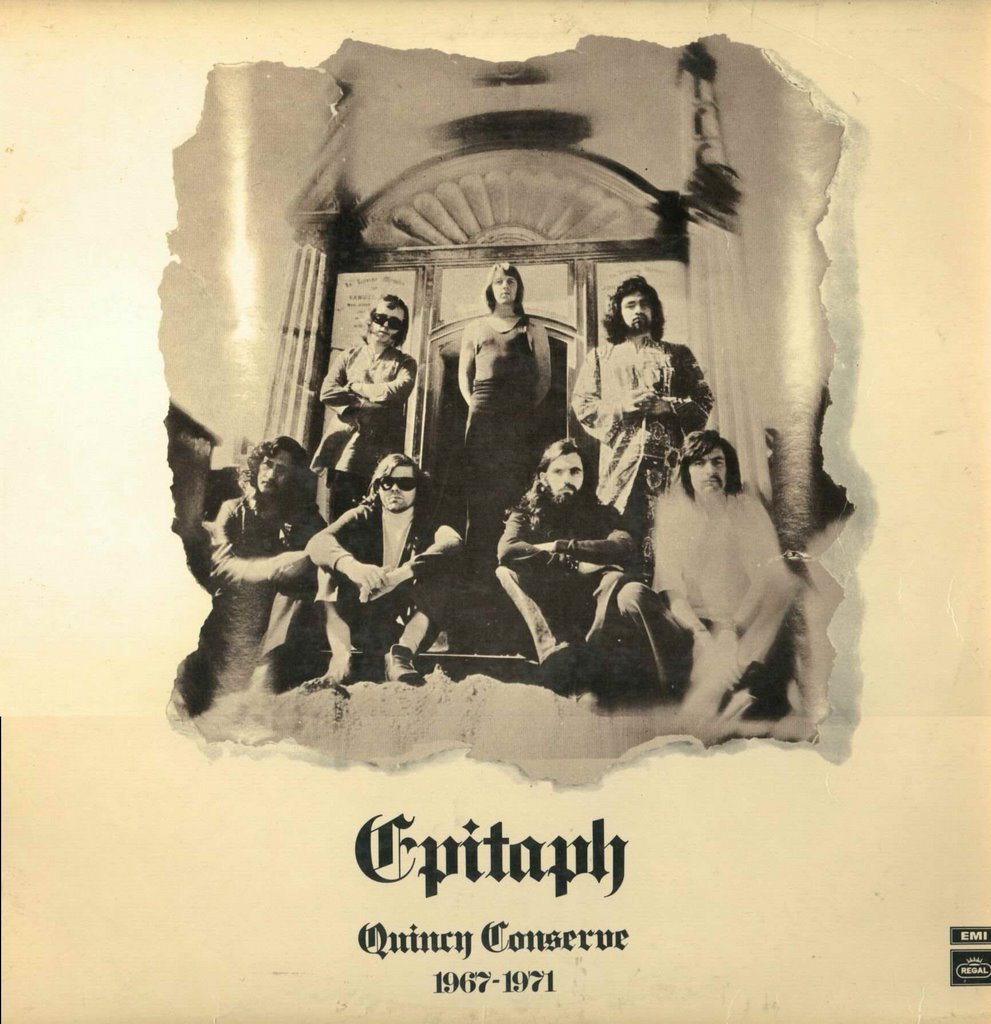 The Quincy Conserve was formed in Wellington in late 1967 by Malcolm Hayman. Malcolm was an extremely talented musician who had already been on the music scene for twelve years by that stage. Hayman was only 15 years old when he arrived in Wellington in 1955 as a member of the Maori Hi Fives showband. The following year the singer-guitarist formed the Trademarks, long-time residents at the Mexicali, a popular nightspot owned by American expatriate Harry Booth. The Trademarks were very popular, and after four years of constant playing, queues formed to see them every time they played. Over the years, 30-odd musicians passed through the ranks of the Trademarks, before Malcolm disbanded the group in 1961. The Trademarks owed more than a little to the Maori showband tradition, where Hayman had learnt his licks, but the group gave Wellingtonians their first taste of rock'n'roll. One member of the Trademarks was Rodney "Dody" Potter, who was later a member of the Keil Isles and Dallas Four.
Following the demise of the Trademarks, Malcolm spent 18 months at the New South Wales Conservatorium of Music, followed by two years on the Australian-Pacific cabaret circuit with a variety of bands. Malcolm was a severe diabetic and in 1965, during a residency in New Caledonia, he came down with tuberculosis, spending the next 14 months in a Noumea hospital. He returned to Wellington in the middle of 1966 and formed a new band called the Soundells.
The Soundells had a residency at the Downtown Club in Wellington and at the end of 1967 they were enticed to go to Auckland to play there. They accepted the offer, but Malcolm decided not to go. Now without a resident band at the Downtown Club, owner Roy Young had enough faith in Malcolm to give him a budget to recruit, equip and rehearse a new band for his club. Malcolm immediately tried the rhythm section of Sounds Unlimited, who had just dissolved, but at rehearsals found that they were not appropriate. He then started scouring the countryside, looking for the best musicians, with a promise of a regular gig and a steady wage.
Malcolm recruited bass player Dave Orams from the Underdogs, keyboardist Rufus Rehu from the Quin Tikis, another previous member of Sounds Unlimited, saxophonist Johnny McCormick, and an inexperienced saxophonist, Dennis Mason. On drums was Bryan Beauchamp, from Bari and the Breakaways, but he was quickly replaced by another former Quin Tikis, Earl Anderson.
Rehearsals over, the Quincy Conserve debuted at the Downtown Club in February 1968. They were one of the most talented and professional groups to appear on the New Zealand music scene in the late sixties. They were Wellington's first 'supergroup'. Ria Kerekere returned from the Soundells to provide some vocals for a little while, and not long after they got going, Earl Anderson came down with hepatitis and was replaced by Raice McLeod.
Malcolm Hayman 1969.
Word spread fast about this group and Roy Young soon recouped his investment. Patrons got their money's worth from the entertainment and the club even featured floorshows from the top soloists in the country. It was a top-class venue , which kept out riff-raff by strictly adhering to stringent dress regulations and an over 18 age restriction. Producer Howard Gable visited the venue and was impressed enough to sign the group to EMI, not only as artists but also as a studio band, to record backing's for the large roster of talent recording for the company, including Allison Durbin.
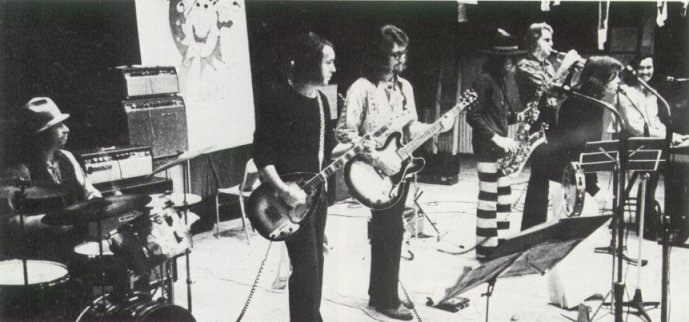 Releasing on the HMV label, their first single "I'm So Proud"/"I've Been Loving You Baby" came out in June 1968. This was followed in 1969 with "Hallelujah"/"Here's To The Next Time" and "Lovin' Look"/"Soul Thing". These records got very good revues, but that wasn't reflected in the sales. Unless you were from Wellington, no-one really knew anything about the group. This was rectified slightly when in December 1968, the group backed Allison Durbin on a national tour. This was the first time they had played outside their Downtown Club residency.
Kevin Furay, who had previously played with Top Shelf, joined the group on both guitar and trumpet in 1970. Two months after Kevin joined, Raice McLeod left and he was replaced by Bruno Lawrence. Raice actually took the seat Bruno had occupied in Sydney with Electric Heap.
Bruno had an immediate impact on the group. He wrote a song that was included on the group's first album, and the song became their biggest hit. The album released in 1970 was "Listen To The Band" and the single was "Ride The Rain"/"I Feel Good". The single was also released in Australia. Bruno's "Ride The Rain" became a finalist in the 1970 Loxene Golden Disc Awards. The second single from the album was "Everybody Has Their Way"/"Purple Frustration".
A second album "Epitaph" was released in 1971. It contained a number of excellent songs and from it came three singles, "Aire Of Good Feeling"/"Don't Arrange Me", "Alright In The City"/"Somebody Stole My Thunder" and "Going Back To The Garden"/"My Michelle Chan".
The Quincy Conserve was always Malcolm Hayman's band and he was a perfectionist and a strong disciplinarian. His rigid control of the group always went down well with venue owners, but didn't always sit too well with band members. It caused the unit to be unhappy at times and the band members resentment eventually tore the group apart. Bruno was always a hard person to manage and he treated Malcolm with casual disdain. Even though Bruno was good value to the group, his irreverence caused him to be fired by Malcolm. In February 1971, a new drummer Richard Burgess was acquired. Bruno was undeterred and moved on to form Blerta.
Not long after Richard joined, Kevin Furay left to form Tanglefoot, and he was replaced by a new trumpet player Barry Brown-Sharpe.
Pressure within the group exploded towards the end of 1971 when Malcolm fired Dave Orams during a rehearsal session. Dennis Mason took exception to this and an argument took place, basically with everybody being sick of being in a band where they had absolutely no say. Dennis said if Dave goes, so do I, and Barry Brown-Sharpe and Johnny McCormick both agreed. The result of the argument was the group was four members less. Hayman decided that there was no point continuing with the group, so he officially disbanded it. Putting their grievances aside, they did get together to do a farewell performance at the Downtown Club on October 30, 1971. Dennis Mason went on to become a member of Arkastra.
Malcolm then joined Furay at Tanglefoot, but before the end of 1971, Roy Young was concerned at the drop of patronage at the Downtown Club, and started putting pressure on Malcolm to form a new band.
 Malcolm swallowed his pride and put together a new Quincy Conserve, promising that it would be a more democratic outfit. From the first version remained Malcolm and Rufus Rehu. Malcolm convinced Johnny McCormick and Dave Orams to return and they added Mike Conway on drums and two temporary members, Australian Peter Cross on trumpet and Harry Leki on guitar.
1972 L to R: Mike Conway, Dave Orams, Kevin Furay, Johnny McCormick,Barry Brown-Sharpe, Malcolm Hayman and Rufus Rehu.
At the beginning of 1972 they were back at the Downtown Club, just as popular as before and as if they had never left. After just a month, Peter Cross and Harry Leki had gone and back from the original version were Barry Brown-Sharpe and Kevin Furay. Dave Orams also went and was replaced by Frits Stigter on bass guitar. Now with the band members having more say, they musical direction moved towards a more jazz-rock style.
Two new singles were released in 1972, "Somebody Somewhere Help Me"/"Tango Boo Gonk" and "Roundhouse"/"You Can Take Your Love".
In November 1972, EMI promoted a concert at the James Hay Theatre in Christchurch. Quincy Conserve performed there along with Blerta, Lutha and Desna Sisarich. The event was recorded and released early in 1973 as an album called "Live". They contributed three tracks to the album.
By the end of 1972, Quincy Conserve were no longer resident at the Downtown Club. In 1973 the breweries had begun to recognise the value of live music in their taverns. Lion Breweries opened a rock venue in the Spectrum Room at the Lion Tavern. Their second venue was at the Cornhill Tavern and Quincy Conserve were installed as residents. They also held a residency at the Speakeasy Bar in Manners Street.
In 1973 their third album was released. It was called "Tasteful" and came with a 7" EP called "Extra Tasteful". Two singles were released from the album, "Keep On Pushing"/"Lady Listen" and "Slut"/"Keep On Playing That Rock'n'Roll".
A deal with Lion Breweries was signed in 1974, and the group spent most of the next year constantly touring the country. They spent on average a week in each town and during that time musicians came and went. By 1975 the group found that their most appreciative audiences were found at jazz festivals. By this stage the line-up consisted of Hayman, Paul Clayton on lead guitar, Peter Blake on keyboards, Rodger Fox on trombone, Geoff Culverwell on trumpet, Murray Loveridge on bass and Billy Brown on drums. Geoff Culverwell had previously been with the Wedge. This combination recorded the group's last album called "The Quincy Conserve" in 1975 for the Ode label and also released two singles, "Song For The Man"/"Epistolary" and "Rockin' Chair"/"Super Strut".
In September 1975, Jack Cooper, manager of Wellington's newly opened 1860 Tavern, invited Rodger Fox to form a jazz band for Saturday afternoon entertainment. He created the 1860 Band, and it comprised Fox, Blake, Brown and Culverwell from Quincy Conserve, plus bassist Dave Pearson. By the end of 1975, the 1860 Band had greater pulling power than Quincy Conserve themselves, so it became a full-time venture in the new year, officially putting an end to Quincy Conserve for good. Hayman and Loveridge went on to form a pub band called Captain Custard.
Rodger Fox went on to form the Rodger Fox Big Band in the late seventies. They recorded a number of albums and included quite a few respected musicians within their ranks over the years. They included Geoff Culverwell from Quincy Conserve and David Feehan from Lost Souls and Tapestry.
Malcolm continued playing for a number of years, but finally his diabetes caught up with him and he died as a result of complications on the 5th November 1988.
Quincy Conserve were never a true pop group, they were more of a musicians band, with Malcolm Hayman possessing one of the most distinctive voices in Kiwi Rock.
In 2001 EMI released a CD called "The Very Best Of Quincy Conserve", which contained most of their singles and some good album tracks.
More info here
Rate Your Music
Link
Sunday, March 19, 2006
Underdogs Blues Band - S/T (1968)
 1968 debut album from this fine New Zealand group who sound like Cream meets The Doors. The band play some excellent covers of songs like "Oh Pretty Woman", "Yonder Wall", "It Hurts Me Too" and a psych version of "Hey Gyp" as well as some good group compositions. The album features fine keyboards and guitar work throughout. Bassist Neil Edwards later joined Human Instinct.
Rate Your Music
Link
Subscribe to:
Posts (Atom)