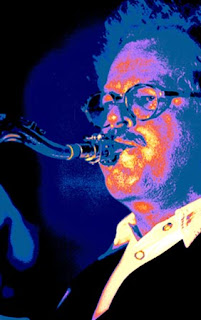
Eero Koivistoinen (born January 13, 1946), one of the all-time greats in Finnish jazz and saxophone, arrived in the Finnish jazz scene in the mid-60s. Ever since, he has been one of the most distinguished and trusted jazz musicians in Finland. He is known for his versatility and creativeness, his tastes ranging from pithy jazz solos to large-scale orchestral works.
Eero Koivistoinen’s interest in music began at an early age, his first choices being classical and the violin. At sixteen, the violin was put aside in favour of the alto saxophone. Later on he switched to the tenor and soprano saxophones. Barely in his twenties, Koivistoinen was already a familiar face in Helsinki’s burgeoning jazz clubs. At that time he was studying at the Sibelius Academy: saxophone with Eero Linnala and composition with the famous Aulis Sallinen.
Eero Koivistoinen’s first line-up was with Edward Vesala on drums and Pekka Sarmanto on bass. This improvising trio wasthe first to explore the possibilities of avant-garde and free jazz in Finland. In 1967 Koivistoinen's remarkable talents were rewarded as the newly-founded Finnish Jazz Federation decided he should be the first ever recipient of the Georgie Award and he was nominated Jazz Musician of the Year. In 1969 Koivistoinen was to continue on the winning trail as his group won the competition for ensembles in Montreux, Switzerland. This gave him an opportunity to perform at the Newport Jazz Festival in the US. This award was, in fact, the very first time Finnish jazz was recognised on this scale.
In the early 70s Koivistoinen refined his skills in composition with one term at the Sibelius Academy and three terms at the prestigious Berklee College of Music in Boston, where he had such teachers as Herb Pomeroy and Joe Viola. Since then he himself has been teaching at the Sibelius Academy. Towards the end of the decade Koivistoinen made several concert tours and recordings and his quartet attracted a great deal of attention.
In 1981 Koivistoinen won the Arranger’s Prize in the Nordring Competition held by the European Broadcasting Union (EBU) in Jersey with his own orchestral work Ultima Thule. Six years later, in 1987, the Foundation for the Promotion of Finnish Music organised a competition for big band compositions. Koivistoinen won the first prize with a work entitled Kukonpesä.

The UMO Jazz Orchestra has played an important role in Koivistoinen's career ever since its creation in 1975. In the mid-90s, after gradually shifting his emphasis from saxophone playing to composing and conducting, Koivistoinen was appointed Artistic Director of the renowned group for a period of two years (1996-98). As a conductor, he is held in high esteem not only locally, but also through his appearances in Germany, Norway, Denmark, Hungary, Estonia and Lithuania. Koivistoinen was the producer of the UMO’s first recordings for a label outside Finland (Umo Jazz Orchestra on Naxos Jazz label); he also acted as the conductor and arranger of Electrifying Miles with Tim Hagans as the guest star on A-Records label. The album was given four stars in Down Beat Magazine.
In the last few years, among other things, Eero has shown a growing interest in Africa and African based music. As a result, he recorded Eero Koivistoinen and Senegalese Drums (1998) and with the band performed on the Jazz Federation’s tour and in major jazz festivals in Finland as well as at the Stockholm Jazz Festival (2003). Sven Malm of Svenska Dagbladet wrote about the performance, ”…an enjoyable encounter of cultures with the sax veteran Eero Koivistoinen and a group of Senegalese drum virtuosos.Lovely group play, strong with colour, unusual and
Eero jamming in Grand Popo, Benin 2002
astonishing – such a thing gives a profile to the festival. ” In 2003 Koivistoinen also produced a record with Galaxy containing mbalax and other Senegalese musical heritage. A few years earlier he had produced records for Naxos World label in Africa: Mozambique Relief, Venancio Mbande Orchestra, Eduardo Durao Timbila Ensemble in Mozambique and Alexandra Youth Choir. Alexandra is a township close to Johannesburg, South Africa.The Jazz Federation’s tour in 2003 attracted the largest audiences ever when Koivistoinen put togethera band called Imbizo, with Gloria Bosman, Concord Nkabinde and Mabeleng Moholo from South Africa being among the performers.

What else should be added? Among other projects, Eero Koivistoinen’s extensive list of works contains the ballet Äiti Maa (Mother Earth), a suite inspired by Charles Baudelaire's Les Fleurs du Mal, a variety of vocal pieces, and music for several films and radio plays. For the Finnish Broadcasting Company Koivistoinen has made a radiophonic suite called Suomi - maailman majakka using documentary material, e.g. speeches of Finnish presidents, with musical samples and improvisations. Another recent large-scale work is a suite of Thelonius Monk’s themes called Round about Monk arranged for a symphony orchestra. The task was commissioned by the Finnish Radio Symphony Orchestra. Koivistoinen has a reputation for melodically and timbrally rich orchestral technique, and as an arranger he is appreciated well beyond the circles of his jazz colleagues. Eero Koivistoinen has also encouraged various experimental combos as the chairman of the composers' Zone Society. As a producer, he has established a label of his own, Pro Records, which has released works both by him personally and by promising young musicians. In 1997 Bill Shoemaker of the magazine Jazz Times commented: ”Finland has an impressively large pool of diverse, erudite talents. Several, including Eero Koivistoinen, are among the world’s best on their respective instruments.”
On Recordings
Koivistoinen's recorded output began in 1967 with Blues Section, a blues-rocky, Hendrix-influenced band. His first solo EP of the same year, Jappa, is today a collectors’ item. Valtakunta (1969), Koivistoinen's first solo album, was inspired by Finnish poetry. It was a real breakthrough and started a career laced with literature-oriented works, with inspiration ranging from the poetry of Lauri Viita and Pentti Saarikoski to the limericks and poems for children of Kirsi Kunnas. Ever since, Koivistoinen's album stack has been growing steadily, both with solo releases and appearances as a sideman.
Picture In Three Colours (1983) was one culmination point: Koivistoinen had gathered together a group of international megastars. The band included such musicians as Jack DeJohnette (drums), John Scofield (guitar), Tom Harrell (trumpet), Jim McNeely (piano) and Ron McClure (bass). DeJohnette, Scofield and McClure got together again in 1992 , joined by Randy Brecker on trumpet, Conrad Herwig on trombone and Dave Kikoski on piano, to record Altered Things, which was highly acclaimed by critics. Bill Milkowski of Down Beat granted four and a half stars to this album and wrote, ”But a cursory listening to Altered Things reveals that these musicians were motivated by more than just funding. Koivistoinen happens to be a first-rate composer, an arranger of the highest order, and a strong improviser on tenor.”
Other multinational groups can be heard on the albums Dialog (1995), Sometime Ago (1999) and Zone: First Definition (1999). Dale Smoak of Cadence described the group play on Dialog: “Saxophonist Eero Koivistoinen leads a powerful multinational quintet through an energetic set of modern modal jazz. …Koivistoinen wrote eight of the twelve tunes and all of the arrangements. His settings and the strong solo and group play make for exciting music. Recommended.”
The new millennium has seen some re-releases of his older albums, as well as new recordings, too. Especially the re-edition of Wahoo! (2000) has been a great success. The latest two recordings on Silence label have drawn their inspiration from Finnish heritage. Utu (2001) is a collection of Finnish folk songs arranged for a jazz quartet. Suomalainen (2003) is featuring the impressive vocalism of Johanna Iivanainen, with a repertoire of old and new Finnish songs.
Eero Koivistoinen

Not so long ago Lauri Karvonen, jazz critic of the leading Finnish daily, Helsingin Sanomat, wrote: “Eero Koivistoinen has in the course of thirty years built up, bit by bit, a style of his own that basically took shape ages ago. Since then he has in fact simply honed it down to make it more and more perfect. This has meant increasing enjoyment for the listener as he has trimmed it of any dead wood, acquired more confidence and introduced further nuances and little strokes of genius more apposite than the last. Music beyond compare.” Petri Silas concludes: ” Whichever way one slices it, Eero Koivistoinen is the perfect example of a hungry maker of music still going strong after more than one third of a century. Forever vital in his expression and gracious in his attitude, Koivistoinen has managed to maintain a childlike curiosity in all things musical.”
Co-players
In his native Finland Koivistoinen has worked with nearly every Finnish jazz musician and a great number of ensembles. The most important employer in 1975 - 90 and 1996 - 98 was the UMO Jazz Orchestra, where Koivistoinen worked as a saxophonist, conductor and artistic director with several legendary jazz musicians. The list of his foreign co-players has names like this:
Dizzy Gillespie, Charlie Mariano, John Scofield, Ron McClure, Jack DeJohnette, Idrees Sulieman, Randy Brecker, Tom Harrell, Jim McNeely, Conrad Herwig, Slide Hampton, James Moody, Clifford Jordan, Dexter Gordon, Art Farmer, Gil Evans, Thad Jones, Mel Lewis, Billy Hart, George, Russell, Mike Gibbs, Ted Curson, Helen Merrill, Bob Brookmeyer, Clark Terry, Dave Kikoski, McCoy Tyner, Tim Hagans, Joe Henderson, Oliver Nelson, Mercer Ellington, Ray Anderson, Niels Henning Örsted Pedersen, Jesper Lundgaard, Leroy Lowe, Anders Bergcrantz, John Tchikai, Allan Botchinsky, Alex Riel, Palle Mikkelborg, Mario Bauza, Dave Liebman, George Wadenius, Philip Catherine, Sabu Martinez, Bertil Lövgren, Bernt Rosengren, Lasse Lindgren, Jeff Hirshfield, Kenny Drew, Claudio Roditi, Azymuth, Paquito Rivera, Abe Laboriel, Justo Almario, Kevin Hayes, Benny Carter, Red Mitchell, Don Menza, Bengt Hallberg, Etta Cameron, Eddie "Lockjaw" Davis, George Fame, Benny Golson, Herb Geller, Jerry Dodgion, Bill Holman, Muhal Richard Abrams, Louis Bellson, Johnny Griffin, Louis Stewart, Mario Grillo, Herb Pomeroy, Dino Saluzzi, Mike Nock, Mike Westbrook, Larry Coryell, Zoot Sims, Graham Collier, Jeff Williams, Bob Berg, Albert Mangelsdorf, Senegalese Drums, Galaxy, Eduardo Durao, Gloria Bosman, Concord Nkabinde, Barry Van Zyl, Lulu Gontzana, Kenny Washington, Alan Jean-Marie, Horace Parlan, Alvin Queen, Bennie Wallace
Eero Koivistoinen home page
Rate Your Music
 Eero Koivistoinen - Valtakunta (1968)
 Eero Koivistoinen - For Children (1970)
 Eero Koivistoinen Music Society - Wahoo! (1972)
 Eero Koivistoinen Quartet - Labyrinth (1977)