Saturday, February 24, 2007

Coke - S/T (1972)

Funky Latin breaks and very groovy grooves -- the kind of record that you hear for only a second, and say "oh yeah, this is the stuff!" Coke were an obscure Florida combo who mixed together Latin, funk, and soul -- served up in a crossover style that's halfway between the sound of the NuYorican generation and the heavier hitters of LA's Chicano funk scene! Instrumentation includes organ, guitar, and trumpets -- and vocals are delivered in a brown eyed soul style that burns nicely with the heavier grooves of the group. But best of all is the drummer, who really kicks it large on the kit -- and creates some really nice funky numbers on the set! Includes the break classic "Na Na", plus the tunes "Got To Touch Your Face", "Te Amo Mas", "Quiero Decirte", "Bang Bang", "Bun Bun Bun", "You Turn Me On", and "Que Seria De Mi". A really great album -- with a totally unique sound!

Rate Your Music

Link


Z'ev - Live 1988

Ritual voodoo steel drumming Live 1988 Frankfurt am Main Volksbildungsheim.

Z'ev - Salts Of Heavy Metals (1981) & Headphone Musics #'s 1 to 6 (1970's-80's)


Z'ev (born Stefan Weiser) straddles the nearly unbridgeable and highly volatile gulf between the art world and the music industry. Acclaimed as one of the world's best and most original percussionists, Weiser began recording in the late '60s in a handful of psych-out projects. By the late '70s, he took on the Z'ev moniker to explore the "spatial poetics" of the polyrhythmic clamor he had established with his hand-built percussive instruments. His dozens of collaborative projects expanded to include work with John Cage, Glenn Branca, The Hafler Trio, Psychic TV, and Rhythm & Noise.

"I began playing drums when 4 years old, making drum-sets at 5 or 6 and first studied drums when I was 8. My first professional show was at 12. At 13, I began to write poetry and to explore the plastic arts. These three contexts continued to develop, and in 1968 I attended California Institute of the Arts, studying ethnomusicology - in particular, African, Balinese and East Indian musics. There I came into contact with many of the Fluxus artists (most notably Emmett Williams), left ethnomusicology and started to work seriously with 'concrete' and 'performance' poetry. At that time, I'd decided to stop pursuing music as a career so that I could concentrate on poetry. During the years 1969 to 75, I considered myself exclusively as an audio/visual poet. This culminated with my inclusion in the 'Second Generation' show at The Museum of Conceptual Art in San Francisco. It was around this time that I began to play music again with the group Cellar-M. In 1979, I moved from San Francisco to New York City, working with Glenn Branca (on Symphony #2 ), Simone Forti (on Spring ), guitarist Rudolf Grey, and Tim Wright (founder of Pere Ubu), amongst others. In 1980, I toured Europe for the first time, and in 1985, became a resident of Amsterdam..." More Z'ev in his own words here


Rate Your Music


Thursday, February 22, 2007

Drömpojkarna - S/T (1979)

Band from Sweden. More info welcomed.


Rate Your Music

Link


Tuesday, February 20, 2007

Boastein Byron Cigarette Army

Founded at a cottage in Osen , April 1970 by Øistein Boassen and Are Storstein, the Boastein Byron Cigarette Army was quickly to become the most secret cottage band in the world.

Boastein Byron Cigarette Army - Urgata Hurgata (1980)


Boastein Byron Cigarette Army - Jeg Har Min Egen Luke (1977)

Monday, February 19, 2007

Frantz - Peut Etre Aux Yeux Silence (1970)

Concept prog with wonderful organ and female voice.


Rate Your Music

Link


Nessie - Head In The Sand (1979)


Belgian prog - mainstream, but has it's moments.

Rate Your Music

Link


Sunday, February 18, 2007

Bernt Staf - När Dimman Lättar (1970) & Valhall (1973)

Swedish sunger/songwriter.

"När Dimman Lättar" line up:
Anders Dahl Fela
Bernt Staf Sång, gitarr
Björn J:son Lindh Piano, flöjt
Bo Dahlman Gitarr (på fyra spår)
Georg Wadenius Bas (på två spår)
Jan Bandel Trummor
Kenny Håkansson elgitarr
Lasse Wellander Gitarr
Stefan Brolund Kontrabas
Sten Bergman Orgel


"Valhall" line up:
Bernt Staf Sång, gitarr
Björn Netz Flöjt
Bo Hansson Moog, keyboard
Finn Sjöberg Gitarr, bas, flöjt
Fred Hellman orgel, piano, elpiano
Rune Carlsson Trummor, congas

Rate Your Music


Edison Electric Band - Bless You Dr. Woodword (1970)

Originally released on Atlantic/Cotillion in 1970, the only album by this Philadelphia combo is a lost nugget which exemplifies the musical freedom of the late 60's, but looks toward the groovy and funky melodicism that would dominate the 70's. Village Voice critic Robert Christgau wrote "Tight, melodic music that thrives somewhere in an uncharted region triangulated by rock, pop, and jazz. Beautifully engineered, too." Members of the band went on to become successful session musicians, performing on essential recordings by Van Morrison, Bonnie Raitt, Maria Muldaur, and John Mayall. Co-produced by legendary jazz producer Joel Dorn. Freak Emporium

Rate Your Music

Link


Saturday, February 17, 2007

Nick and Nick and the Psychotic Drivers - Same (1988)

Nick Saloman (Befis Frond) project. This album is described as "tripping in a dark room with only one light bulb."
The musicians (The Soul Hunters) joining Bevis are:
Nick Vannini - vocals, narration and direction.
J.J.Masini - bass, high vocals and persecution manias
Davide Ragonesi - guitar and manovalanza
Cassini Raggi - keyboards and medical advice
Tarchiani - drums
Steve Semeraro - dangerous drive assistance
As you can tell from the musicians descriptions this lot are seriously deranged, and so is the music but well worth a listen. It seems that Nick not only did not think much of the recording, which was an impromptu jam, he did NOT authorize its release or the use of his name, nor did he receive any sort of compensation for it.

Monday, January 08, 2007

Pôle - Kotrill (1975)

The obscure French Pôle label produced a varied and often experimental range of LP’s in the mid 1970’s, which have since become sought-after items of high interest amongst the small group of record collectors who are aware of them. An air of mystery has surrounded the label and many of the artists who recorded for it. A fair portion of the music released on this label was highly original, experimental and ahead of its time.
Pôle was established and managed in Paris by an entrepeneur named Paul Putti, with his wife Evelyne Henri. Aiming at attracting attention by confusional tactics, Putti made the first release (this one) himself with others, under the group name ‘Pôle’. Several following albums released on the label had this name prominently on the cover alongside the artist’s name, even when totally different musicians were involved, creating further confusion about what was the label, what was the band, and what was the album title! The label released 15 LP’s from 1975-1977, which were sold door-to-door by students and other young people in the poor neighbourhoods of Paris. Presumably some were sold through the mail in small numbers to music vendors in other countries, where some of the records have ended up. At least some (and probably all) of the musicians who recorded for the label did not get any royalties from albums sold, and after this short period of activity the label went bust. Putti went on to found a porn mag named ‘Pulsion’ which apparently did quite well. Many of the Pôle label releases were shortly after reissued on the Tapioca label, but many of these suffer poor sound quality at least in part. I have been told this was due to the use of acetates shoddily ‘remastered’ from the original vinyl, or something like that. On the other hand, many Pôle pressings I have bought or borrowed, that appear to be in near-mint condition, still often don’t sound as clean as they look, at least in part (ie. some tracks or an entire side will be pretty crystal clear, whilst others suffer from lots of high-end distortions on louder trebly bits; a fair bit of surface noise also seems to be common).
Note: although catalogue release numbers for the label run from 0001 to 0020, 0016-0019 were never released as far as I know.
Pôle ‘the group’ was not really a proper group, but rather a loose assemblage of experimentalists (note: there’s a more recent group or person around using the name Pole, and I think they do some kind of techno, but they’re nothing to do with this lot). Initially this consisted of Paul Putti, with the aid of like-minded friends or associates. On ‘Kotrill’, the first release for the new label, Paul Putti contributed to tracks 1 & 3, Thierry Aubrun tracks 1 & 3, and Daniel Bodon track 2. Instrumentation credited on the sleeve was synthesizers, magnetic tapes and treatments, but without noting who did what.
‘Kotrill’ featured pretty rudimentary black & white hand drawn artwork, with a few photos of the group members (or are they just different-looking pictures of Putti alone?) stuck on for good measure. In the middle was the drawing that would grace the label of each Pôle release to come – the sketch of a long-haired person reaching up with one black-sleeved arm to push a button. What it’s meant to signify, if anything, is beyond me – it may be intended to be similarly meaningless as the choice of band and label name. The back cover was just French text written out in pen on a plain white background.
The album featured three tracks (2 of them very lengthy). The title track ‘Kotrill’ [16:35], opening side one, is an abstract slab of weird electroacoustic experimentation that is the most obvious inspiration from this album for Nurse With Wound, who listed Pôle in their notorious list of influences, and it also sounds a bit like the obscure Finnish experimental group Sperm, who are included in the same list. It sounds rather like they were making it up as they went along, and they probably were, but it’s a fascinating sonic stew regardless. Beginning with stereo backwards machine-like sucking sounds looping away, it soon fades and gives way to an ominous wavering drone straight out of an eerie horror movie, and the backwards loop sounds drop back in and out of the mix. The drone builds in creepiness, a primitive rhythm machine joins in, followed by a crappy taped drum loop and various other low synth throbs murking about. There’s backwards melting vocals, everything is rising and falling, like a sea-sick ship of dead souls floating through dark fog to damnation and madness. After a while the darkness fades and it’s just weird, instead of weird and dark. The middle of this track sounds to me like a primitive precursor to parts of Boredoms bassist Hanadensha’s album ‘Acoustic Mothership’, and then fades out to frenzied drumming over electronics that could be a peek into Can’s ‘Tago Mago’. ‘Osiris’ [3:30] concludes the side, with subtle gong strokes setting a slow pulse under rising and falling oscillators and freaky tones. All up a pretty subtle affair.
‘Villin-Gen’ [20:00] takes up all of side two, and is more synth-drone-based, slow and minimal. It’s still dark-ish in a low-key kind of way; perhaps sombre is a better description. There’s not much in the way of changes here except for the backing electronic sounds passing by slowly like deep sea fish freaks, with the main synth only ever really hitting the same two chords throughout the first half of the piece. Perhaps Terry Riley would have sounded like this if he was really into tranquillisers... This is definitely a track for late at night when you want to start shutting down your brain ready for sleep, not that it’s boring (though some people would probably say it is), but rather pleasantly calming and soporific without being saccharine or clichéd. Around the 13 minute mark everything falls away to a slow heart-beat click loop, before growing back with a shimmering drone and the sounds of trickling water, and suddenly we’re washing in a brook or waking up in a daze in the bath with the tap running, take your pick. The drone gives way to an alien operating room and the water sounds fade like a nitrous oxide hallucination, and for the remainder of the track we’re lying there unable to move, pleasantly drugged and anaesthetised while the interdimensional beings do their tinkering and take notes. Then, that wasn’t too painful was it, they’ve finished up, fly off to whatever loophole they came out of, and leave you with your heartbeat ticking away, comfy in your own bed and ready for a good sleep.

The original LP is pretty rare, and remains to be reissued on CD. After this, Pôle the group made one more album (see review for ‘Inside the Dream’), though the label of the same name continued to release albums for a couple of years, some of which as mentioned above were presented in such a way as to make them appear to be also by the group Pôle – such as the Besombes-Rizet and Henri Roger albums. Julian Cope's Head Heritage
Included into highly acclaimed NWW list

Rate Your Music

Link


The Mooney Suzuki - People Get Ready (2000)

The starting track on Mooney Suzuki's first album on Estrus perfectly encapsulates their sound. There is a definite MC5/Stooges sound here. Thumping bass and drums, with the organ and fuzzy guitars coming in to take you away. These guys are out of New York, so a New York Dolls influence is evident. Plenty of garagey, proto-punk rock. Much like the Hellacopters' early releases, this also brings to mind Sonic's Rendezvous Band, with vocals eerily similar to Scott Morgan. This is an album that, no matter how retro the band might sound, still can make one excited that music like this is still extant in the world. Link


Rate Your Music

Link


Tiffany Shade - Same (1967)

Hailing from Cleveland, Ohio (and you thought Devo, The Raspberries and Rachel Sweet were the city's only music exports ...), this outfit's always had a special place in our hearts. As The Tiffany Shade, singer/guitarist Michael Barnes, rhythm guitarist Bob Leonard, bassist Rob Murphy and drummer Tom Schuster deserve plenty of credit, if for no other reason than the fact they managed to turn in one of the year's most impressive set's of English-inspired psychedelia. Not impressed? Imagine how hard it is to sound English when you're from Cleveland !!! With Barnes and Leonard responsible for the bulk of the material ("Come Softly To Me" being the lone non-original), 1969's "The Tiffany Shade" served up an enjoyable blend incorporating garage, psychedelic, pop and even Vaunderville ("A Very Grand Love"). While it may not have been cutting edge in terms of originality, full of fuzz guitar, nifty harmonies and shimmering melodies ("Come Softly To Me"), you could've done far worse in terms of purchases. Personal favorites included "the dreamy "No Reality" and the feedback drenched rocker "One Good Reason". Unfortunately, backed by Mainstream's standard marketing support (e.g. none), the set vanished without a trace). Bad Cat

Rate Your Music

Link


Mary Butterworth Group - Same (1969)

In the Spring of 1968 the Mary Butterworth band was formed. They enjoyed playing a variety of engagements around the Southern California area and in 1969, the recorded the one and only album entitled Mary Butterworth. This original, vinyl album was pre-sold to fans and friends only-- it was never available to the general public. Shortly thereafter, the group split up and never performed together again.

Years passed and rumors spread that Mary Butterworth had made it big. However, that was not the case. What did happen was that one of those original vinyl albums made it into the hands of "bootleggers" in another country. They thought enough of the music to reissued the album, and they began a sales campaign of their own. It didn't stop there. The Butterworth album has been bootlegged at least three other times in two different countries.

The bootlegging has created a Mary Butterworth following and pushed the price of the original vinyl album to over $1,000.00 per vinyl album. The Psychedelic Rock Music of the '60's is still regarded, even today, as some of the greatest live music ever created -- and Mary Butterworth will be a lasting part of that history. This CD also includes many photos of the group. The CD, like the original vinyl album, is bound to be a collector's item. Now you can find out why.

Internet Review:
"A fine progressive rock album which maintains a good standard throughout and features lots of good keyboards and drums. Phase II and Its a Hard Road are perhaps the pick of the bunch, but really every track's a winner. Recommended. Two of its finer moments, Phase II and Week in 8 Days (a bluesy number), can also be heard in Valley of the Son of the Gathering of the Tribe."

More info & buy CD here


Rate Your Music

Link

Saturday, January 06, 2007

Czesław Niemen

Czesław Niemen (real name Czesław Juliusz Wydrzycki) (February 16, 1939 - January 17, 2004) was one of the most important and original Polish rock musicians, singing mainly in the Polish language.

Niemen was born in Wasiliszki in Grodno district. He was a singer with a wide voice scale and rich intonation, a composer and a keyboard player. He made his debut in the early 1960s, singing a Polish kind of rock and roll and soul music. His song of 1967, Dziwny jest ten świat (Strange Is This World) became the most important Polish protest song of that era. He was one of the first Poles to wear long hair and colourful clothes, introducing psychedelia style to communist Poland. The first three records he recorded with his band "Akwarele" (The Watercolour Paintings), later he recorded with his new bands: "Enigmatic", "Grupa Niemen" and "Aerolit". In 1969 he changed musical style to progressive rock, recording the monumental album Enigmatic. The most notable song from it was Bema pamięci żałobny rapsod (A Mournful Rhapsody in Memory of Jozef Bem), based on the 19th century poem by Cyprian Kamil Norwid. The rest of Enigmatic songs were poetry as well. Niemen played Hammond organ, later mellotron and Moog synthesizer on his records.

In the early 1970s, Niemen recorded three English language albums under the CBS label, and in 1974 he recorded Mourner's Rhapsody with Jan Hammer and Rick Laird from Mahavishnu Orchestra. In the seventies, Niemen turned to jazz-rock fusion and electronic music (Katharsis album). In 1972 he also contributed with a song perfomed by him in the movie The Wedding (Wesele, 1972) by film director Andrzej Wajda , laureate of an honorary Oscar. Later, Niemen has also composed film soundtrack and theater music. In the 1990s he also showed interest in painting and computer graphics. He died of cancer in Warsaw.

source: http://en.wikipedia.org/wiki/Czeslaw_Niemen

Rate Your Music


Czesław Niemen - Niemen Enigmatic (1969)


Czesław Niemen - Czy Mnie Jeszcze Pamietasz (1968)


Czesław Niemen - Sen O Warszawie (1969)
This album contains early, rare versions of songs recorded with Niebiesko-Czarni in the early 60's (tracks 1-16) + original recordings with Michel Colombier Orchestra (17-20)


Houston Fearless - Same (1969)

Reissue on CD of one and only album by this Houston, USA outfit. Some excellent hard rocking stuff here with some beautiful psychedelic touches. Originally released on Imperial records in 1969.

Rate Your Music

Link


Friday, January 05, 2007

Ezhevika Re-Ups by requests

Hi!

The following albums have just been reupped according to your request:

Alan Jack Civilization - Bluesy Mind (1969)

Bran - Hedfan (1976) (pre Pererin)

Wooden Horse - Same (1972)

Red Television - Same (1974)

Enjoy! ;)

Lots of thanks!!!!

I'd like to thank my friends at two wonderful blogs:

ProgNotFrog & Lost-In-Tyme

Beleive me, I've spent lots of fun hours there - great records are waiting to be heard!


Thank you, Friends!

Lisa

Facedancers - Same (1972)

Early prog crossover album from 1972 with some psyche influences. Produced by Teo Macero of Miles Davis fame. Creatively designed songs that show thoughtful experimentalism. The lead singer claims he hits the highest note ever recorded by a man on a rock record. True or not - the girly-sounding vocals work well in this context. Interesting album that rewards a few close listens.


Rate Your Music

Link


Wednesday, January 03, 2007

Jarka - Ortodoxia/Morgue O Berenice (1971/1972)

This release combines two early 70s albums from the obscure Spanish band Jarka, led by the excellent pianist Jordi Sabates. Playing with a strong jazz sensibility, Jarka also differed from their Spanish contemporaries in the noticeable lack of any influence from Spanish culture or folk music.
The music on Ortodoxia is predominantly in a jazz-fusion style reminiscent, perhaps, of Soft Machine or other early 70s European jazz-rock groups. Sabates' definitely carries the group with his deft playing, laying down some tasty jazz licks on the piano as well as occasionally turning to the organ or electric piano for more of a fusion approach. The primarily acoustic bass playing of Alfonso de Lucas is also quite impressive, showing a strong familiarity and versatility with the jazz idiom. With these two players coming from an obviously solid jazz background, the drumming, although quite tasteful and inventive, seems a little out of place with its more rock influenced stylings, perhaps reminiscent of Robert Wyatt. The album overall is rather average; there is some good playing and some nice moments, but nothing that really stands out as spectacular.
The second album, on the other hand, is a real treat. Whereas Ortodoxia contained elements of rock and jazz-rock styles, coming across as two jazz musicians trying to play a bit outside of their element, Morgue O Berenice sticks to their forte, and serves up some prime late-60s/early-70s freestyle jazz in the vein of Miles Davis' ensembles of that period. Expanded to a four piece, with the addition of a guitarist as well as a new drummer, the album is a significant improvement over their first. Sabates' playing really shines here, and it is obvious that he could have held his own in any of Miles' lineups. His style is probably most reminiscent of Herbie Hancock; somewhat impressionistic with a keen sense of chordal colors. His chops work best on the piano, but he also knows how to make his Fender Rhodes growl and bite, and there is some fine playing featuring that classic jazz electric piano sound as well. The guitar, present on maybe half the tunes, is also excellent, and may remind some of a slightly less aggressive John McLaughlin in his Miles Davis days. The new drummer is better than their first, and in any other context would probably be considered excellent, but he is clearly not a jazz drummer, and given the quality of the rest of the players, he is the weak link, albeit a small one. Basically, he's no Tony Williams, but then again, very few drummers are. Just to keep everyone off balance, after six solid tracks of excellent jazz, Morgue O Berenice finishes up with a short Woody Guthrie bluegrass tune, complete with banjo and mandolin! Gnosis 2000

Jarka was the early 70's band of keyboardist Jordi Sabates (see his incredible Ocells Del Mes Enlla"). He plays piano, electric piano and organ, backed by bass and drums. This is both their albums on one CD. The 2nd album adds some guests, but the overall sound is still firmly on the keyboards with rhythm section. Some parts are quite jazzy, while others sound like early progressive rock mixed with a sorta Canterbury jazz/rock sound. Rather nice and stupendously obscure! Wayside Music

Rate Your Music

Link


Thorinshield - Same (1968)

The U.S. folk-psych trio Thorinshield have long been cult favorites amongst "sunshine pop" aficionados, but their sole 1968 album has never been available on CD before. A mixture of folk, psychedelia and harmony pop that features dazzling harmonies akin to those being created by Curt Boettcher at the same time, it is presented here complete with two rare non-LP sides, showing the band to be an unfairly-neglected piece of Los Angeles 1960s pop jigsaw.


Rate Your Music

Link


Sunday, December 31, 2006

Kola Beldyi - Uvezu Tebya Ya V Tundru (1960s)

Happy New Year!!!!!!


Rate Your Music

Link

password: ezhevika.blogspot.com

Alan Trajan - Firm Roots (1969)

Scottish keyboardist Alan Trajan's 1969 album is an unsettling collection of rock songs and ballads featuring prominent organ, fiery guitar, soulful vocals and acoustic picking from folk legend Davy Graham. Produced by Ray Horricks (Bread Love & Dreams, Human Beast, Davy Graham), it's well-established as one of the rarest singer-songwriter recordings of the period. Forced Exposure
Rate Your Music

Link

Cosa Nostra - Same (1971)

Heavy duty rare Latin funk psych album recorded in Mexico City in 1971, their English language debut (not to be confused with their Spanish-language second album, reissued by Lazarus on LP); heavy grooves right from the start, with hard guitar, bass, drums and organ kicking it and not letting up; sounds a little like the Black Sugar albums, if you can imagine U-Roy 'singing' along with the rhythm tracks, and some strangely dissonant background singers chiming in to boot; but all vocal limitations aside, has some great cuts, such as the eponymous track 'Cosa Nostra', the funky 'Squeeze it Tight' with a real pushy groove, the rife-for-sample intro to 'Proud Mary', and the shimmering 'Change of Mind'.

Zipper - Same (1974)


Dead Moon related band.
CD/LP still avaialble from Music Maniac
Rate Your Music

Link

Vindication - Same (1973)


Xian prog Enjoy! ;)

Rate Your Music

Link

Sunday, November 12, 2006

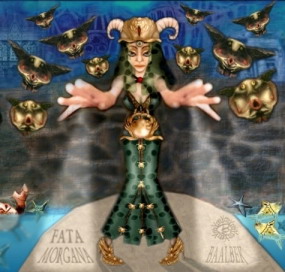
Baalbek - Fata Morgana (2000)

In October 1994 after almost 2 years of preparing material, originally composed by their first line-up, they made their debut in the city of La Plata (Buenos Aires, Argentina) under the name of FATA MORGANA. In 1995 they became BAALBEK.After performing throughout many years in the city of La Plata, they participated in the first the First Artisans Encounter in the province of Bs. As. In the city of Junín with an open show together with local bands as well as groups from Capital Federal.Needless to say the most important performance was at the BUENOS AIRES PROG 99 held at the auditoriumAt ACATRAZ in Cap. Fed. in December 1999 where the groups that participated in the first show were: Guitar Ensemble of Buenos Aires, 2112 and ANEKDOTEN from Sweden and in the second part were: Baalbek, Nexus and Tempus Fugit from Brazil.This festival was the first held in Argentina with international level, included among the yearly festivals of progressive rock worldwide.At the end of 1999 they started recording their first CD "FATA MORGANA", for the Brazilian record company Record Runner, after a year of adding software for the digital recording aided by computers.The record company Record Runner distributed the record in more than 15 countries of the world such as Brazil, U.S.A., Mexico, Spain, France, England, Poland, Denmark, Italy, Finland, Japan and others.Baalbek officially presented their first CD on Saturday April 7 2001, at the Centro Cultural La Plata, Sala Costamagna, La Plata.Baalbek is one of the few Argentine bands which attracted the attention of the important worldwide progressive movement, Baalbek was played on the American radios (PLANET PROG) and was included in the most important catalogs of the biggest distributors such as CD EUROEXPRESS from Europe, MUSEA RECORDS from France, PROGRESIVE ROCK AND PROGRESSIVE METAL from Brazil, MUSIC SELECTION from Holland, Distribution Inc from Canada, SROOM from the USA, THE MISSING PIECE from Sweden, SYN-PHONIC PROGRESSIVE ROCK from USA, etc.Some international magazines commented about Baalbek:"Baalbek has an eclectic progressive fusion style with influences by jazz-rock. The drummer Pablo Gonzalez, the bass player Fabián Vera, the keyboard player Eduardo Gustavino, the saxophonist Pablo Clavijo and the excellent guitarist Gonzalo Romero form the group. They made a very good impression and we expect great music from Baalbek in the years to come." Progression Magazine (USA) - issue 34 "The Argentinean band Baalbek gives us an example of their music which outlines a semi-symphonic style, with jazz and psychedelic elements, sensation achieved by the seldom use of sax. There are strong elements from the "seventies", reminding the listener of GNIDROLOG, HAPPY THE MAN and KING KRIMSON, plus the sound of the 90. We also point out a competition between the musicians. Metamúsica Magazine (Brazil) - Nº 009"Without any doubt it is a different record. Fata Morgana is not really included within the purely progressive symphonic rock, it is a fusion work which uses very interesting elaborated elements. Baalbek is an instrumental group, with a well-defined identity though never static one. They dive in different waters in a very attractive search. This diversity makes the album fresh and elaborated at the same time." Revista Mellotrón (Argentina) - Nº 28"El instrumental/symphonic prog from Argentina. These very strong five instrumentalists have made a very interesting and innovating album. There are classic/symphonic prog elements as well as some jazz-fusion influences. It is full of attitude and different humor The melodic guitars, beautiful keyboards, a saxophone and a solid drums and bass foundation. The different tracks have a lot of character and none of the 13 tracks of this album resemble each other. It is their debut CD and I hope it is not the last one. This is really good. The only thing missing would be an excellent voice, which would turn it into a masterpiece. (!!) RECOMMENDEDOlov Andersson – Well-known Music and critic of Swedish Progressive Rock.

Sunday, November 05, 2006

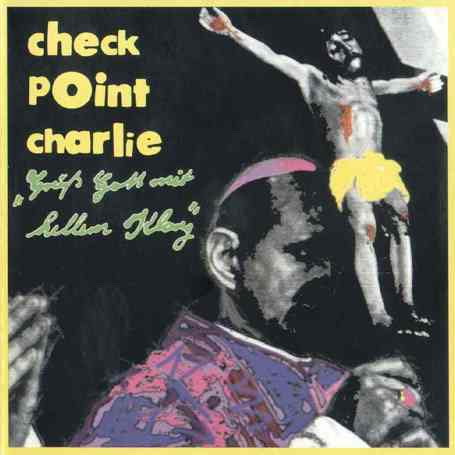
Checkpoint Charlie - Grüß Gott mit hellem Klang (1972)

Checkpoint Charlie was formed in 1967 and named after the infamous checkpoint between the Eastern and Western zones of Berlin. They were part of the same polit rock wave as Floh De Cologne and Ton Steine Scherben.


Included into highly acclaimed NWW list

Rate Your Music

Link

Zoreya -S/T (1996)

Soft, dreamy and jazzy prog from Brazil. A bit in the Popol Vuh realm. This work by new Sao Paulo band is like a long and weird soundtrack. ZOREYA is a Brazilian line-up that performs a quiet and relatively mysterious Progressive jazz-rock, based on the omnipresent sax lines. The eponymous album was recorded during a period of time situated between 1989 and 1995, and finally issued in 1996. An ethnic tale of 8 stories with a wide mixture of instrumental progressive, new age, world music and jazz. Very ethnic with sax, pianos, flutes, guitars etc..

Rate Your Music

Link

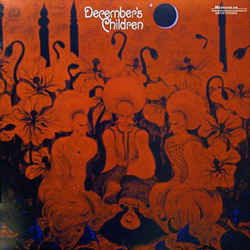
December's Children - S/T (1968)

At last a CD issue of much sought after 1968 album. The only release by this US band who sound like The New Tweedy Brothers/Love Exchange/Growing Concern etc. Male and female vocal harmonies are wrapped with some great West Coast psych guitar work giving the whole album a classic US psych feel.
Freak Emporium

Rate Your Music

Link